If you’re a regular follower of Philippine weather reports, you’ve probably seen the term “Shear Line” in PAGASA’s daily weather updates. But what exactly does this term mean? How does it impact the weather in the Philippines?
In this article, we’ll explain what is a shear line, how it forms, and why it’s important for forecasting the weather in the Philippines.
What is a Shear Line?
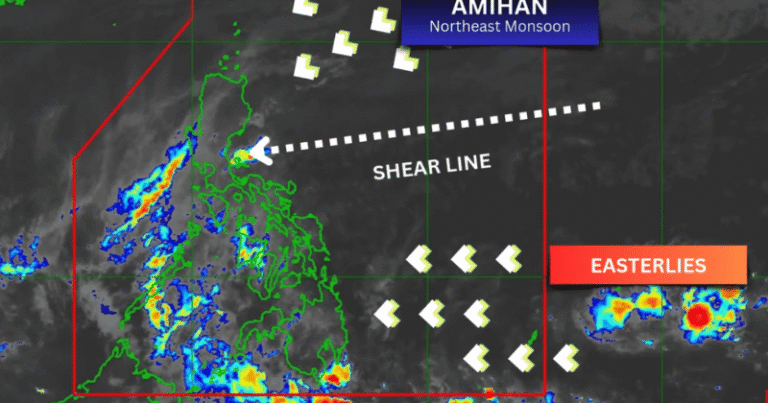
A shear line is a boundary in the atmosphere where wind direction or speed changes abruptly over a short distance. This occurs when two different air masses meet, each with different wind speeds or directions. In simple terms, it’s the line where wind changes behavior.
Shear lines are common in tropical regions, and in the Philippines, they often bring rainshowers, thunderstorms, and localized flooding.
How Does a Shear Line Affect Weather in the Philippines?
Watch Today’s Weather Update
Quick video recap of today’s forecast before you scroll down.
For daily updates, subscribe here.
In tropical countries like the Philippines, shear lines can be a significant cause of local weather disturbances. While they are not as severe as storms or typhoons, they can still bring heavy rain and thunder to certain regions.
When a shear line occurs:
- Clouds form along the line, as the wind shift triggers moisture in the air to condense.
- Rainshowers and thunderstorms are common in areas where the shear line affects the atmosphere.
- Localized flooding can occur, especially in areas with poor drainage or those situated in hilly or mountainous regions.
PAGASA often includes shear lines in its weather forecasts to warn the public about these possible effects. While they typically don’t cause widespread storm conditions, localized areas can experience moderate to heavy rains.
What Causes a Shear Line?
A shear line forms when two different air masses meet, usually with a difference in wind direction or speed. This wind shift creates turbulence in the atmosphere, which causes:
- Cloud formation
- Increased moisture in the air
- Development of rainshowers and thunderstorms
In the Philippines, shear lines can form when:
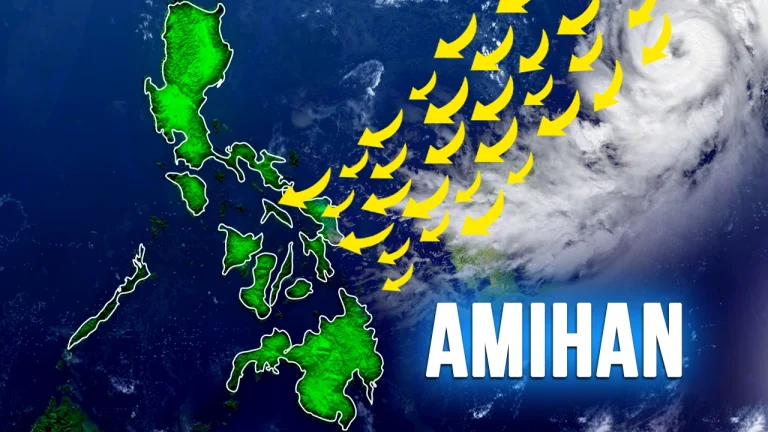
- The Northeast Monsoon (Amihan) interacts with southerly winds.
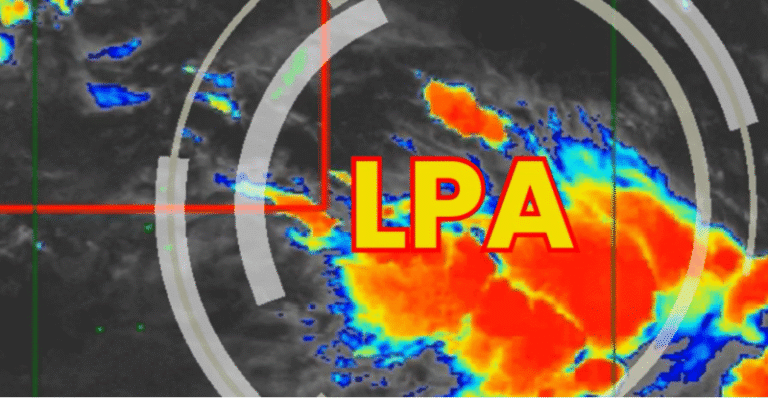
- Low pressure areas (LPAs) or other weather systems cause wind convergence, where winds from different directions collide.
- Tropical disturbances weaken, leaving behind a zone of shear that brings rain and storms.
Shear Line vs. Other Weather Systems
Shear Line vs. Monsoons
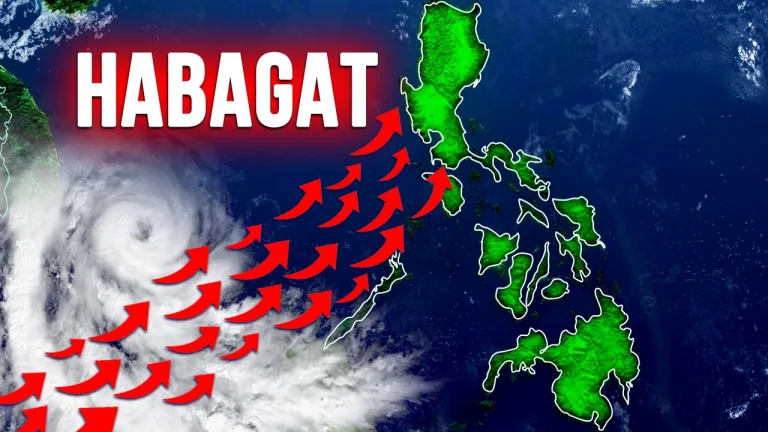
- Monsoons are large-scale seasonal wind patterns (like Amihan and Habagat) that affect broad regions over months.
- Shear lines, on the other hand, are much more localized, typically lasting for a shorter period and affecting only specific areas.
Shear Line vs. Low Pressure Areas (LPAs)
- LPAs are areas of low atmospheric pressure that can lead to tropical storms or cyclones. Shear lines are not storms themselves but can enhance rainfall from nearby weather systems like LPAs.
When Does a Shear Line Occur in the Philippines?
Shear lines are most common during the rainy season, but they can happen year-round in tropical regions. In the Philippines, PAGASA often includes shear lines in weather reports, especially when they cause:
- Rain in the western sections of the country
- Heavy rain in the central or northern regions
- Thunderstorms in coastal areas
Impacts of a Shear Line
When PAGASA warns of a shear line, the impacts can range from light rain to severe thunderstorms. In some cases, shear lines can lead to:
- Flash floods
- Landslides (especially in hilly areas)
- Localized heavy rains that disrupt daily activities
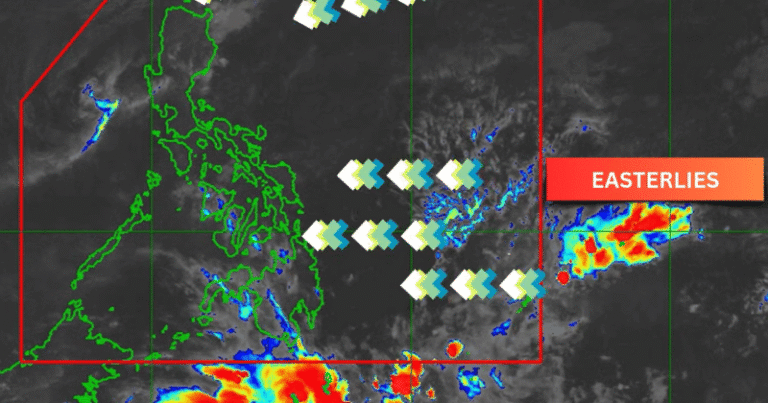
These impacts are especially common when a shear line intersects with other weather systems like Easterlies or low pressure areas (LPAs).
Understanding the Shear Line
In summary, a shear line is an important weather phenomenon in the Philippines. It refers to a boundary where the wind suddenly shifts direction or speed, leading to localized thunderstorms, rain, and possible flooding. While not as severe as storms or typhoons, shear lines can cause significant weather changes, especially during the rainy season.
Understanding what a shear line is helps you interpret PAGASA’s daily weather updates more accurately. When a shear line is affecting the country, it’s essential to stay updated on the forecast, especially if you live in areas that may experience flash floods or landslides.