If you regularly check weather forecasts from PAGASA, you may have heard about a Low Pressure Area (LPA). But what exactly is an LPA, and how does it affect the weather in the Philippines?
In this article, we’ll explain the Low Pressure Area meaning, what LPAs are, how they form, and how they influence the weather in your region.
Low Pressure Area Meaning
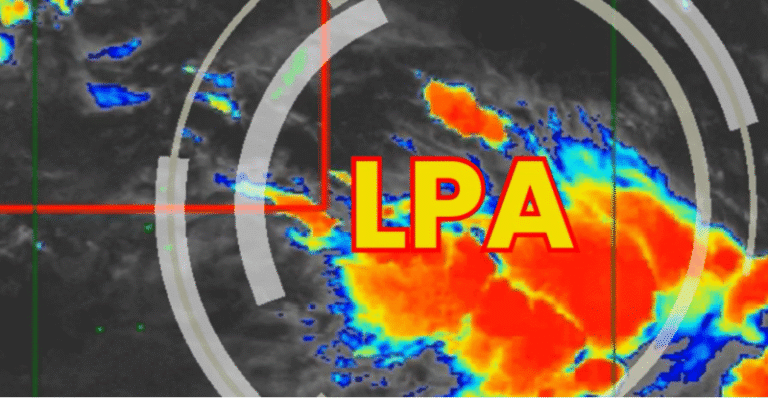
A Low Pressure Area (LPA) is a region in the atmosphere where the air pressure is lower than the surrounding areas. This causes the air to rise, cool, and condense, leading to cloud formation and precipitation.
While LPAs are not as intense as tropical storms or typhoons, they can still produce rain, thunderstorms, and localized flooding.
How LPAs are Form
LPAs form when:
- Warm air rises from the surface, typically over warm ocean waters.
- This rising air creates a low-pressure zone near the surface.
- The air pressure drops, causing more air to move in, which can create clouds and rain.
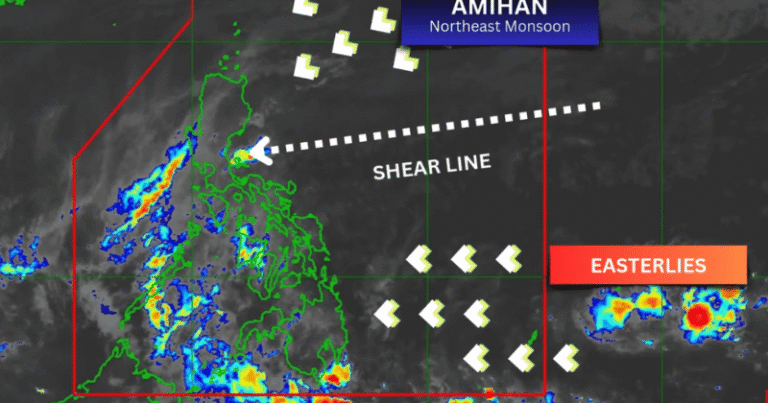
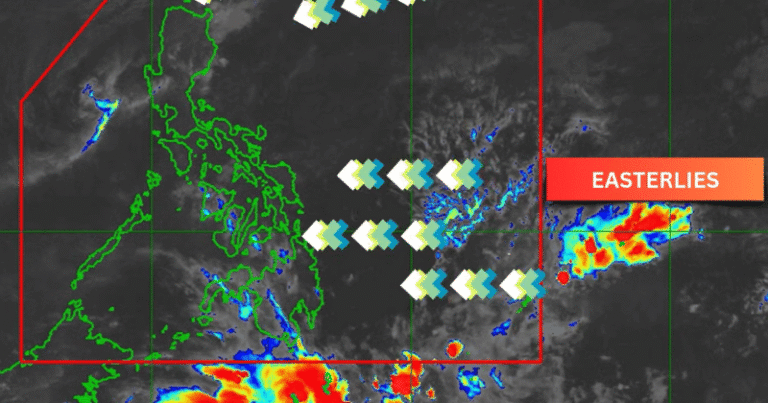
- Thunderstorms and heavy rainfall often develop when this air interacts with other weather systems like Shear Lines, Tropical Disturbances, or Easterlies.
What Does LPA Bring?
When an LPA forms, it often leads to:
- Cloudy skies
- Rainshowers (ranging from light to heavy)
- Thunderstorms
- Localized flooding or landslides, especially in mountainous or poorly drained areas
PAGASA closely monitors LPAs because they can sometimes develop into tropical storms or typhoons if conditions become favorable.
How PAGASA Uses LPAs in Weather Reports
In PAGASA weather bulletins, an LPA is usually indicated when:
“At 3:00 AM today, the Low Pressure Area (LPA) was estimated based on all available data at [location].”
This means:
- The system has been identified as a low pressure zone.
- It is not yet a storm, but it may bring rain or thunderstorms.
- It could eventually develop into a Tropical Depression if it strengthens and becomes more organized.
LPA vs. Tropical Depression vs. Typhoon
While an LPA is a weak weather system, it can sometimes develop into more serious weather systems. Here’s how LPAs compare to Tropical Depressions and Typhoons:
| Feature | LPA | Tropical Depression | Typhoon |
|---|---|---|---|
| Wind Speed | Less than 36 km/h | 37–61 km/h | Over 62 km/h |
| Structure | Disorganized | More organized | Fully structured |
| Rain Potential | Rain and thunderstorms | Heavy rain | Intense rain, strong winds |
| Impact | Local flooding | Strong storms, widespread impact | Severe damage, widespread impact |
An LPA can be a precursor to a tropical depression or storm if it continues to strengthen.
When Does an LPA Occur in the Philippines?
LPAs can form throughout the year, but they are more common during the rainy season, particularly from June to November when tropical disturbances are more likely.
In the Philippines, LPAs can be more frequent because of the country’s proximity to the Pacific Ocean, where warm, moist air is readily available.
PAGASA issues alerts and updates about LPAs to warn the public, especially when they bring significant rain or threaten to intensify into more severe systems like tropical storms.
What Should You Do During an LPA?
When PAGASA announces an LPA, it’s important to:
- Stay informed: Keep track of daily weather updates through official weather reports.
- Prepare for rain: Even though LPAs are not as severe as typhoons, flash floods can still occur, especially in flood-prone areas.
- Check local advisories: Follow evacuation or flood warnings if you live in areas vulnerable to flooding.
- Be cautious of landslides: Especially if you live in mountainous regions, heavy rains from an LPA can trigger landslides.
Shear Line and LPA: How Are They Related?
A Shear Line often causes similar weather conditions to those caused by an LPA, such as rain and thunderstorms. However, while LPAs are low-pressure systems, shear lines are boundaries where two air masses meet, resulting in different weather patterns.
In some cases, LPAs and shear lines can work together to produce heavy rain and thunderstorms.
Understanding LPAs and Their Impact
A Low Pressure Area (LPA) is a weather system that causes rain, thunderstorms, and localized flooding. While not as intense as a tropical storm or typhoon, LPAs can still disrupt daily activities and cause significant rain. PAGASA closely monitors LPAs because they can intensify into stronger storms.
By understanding what an LPA is and how it develops, you can stay prepared during the rainy season and beyond.